We're not asking you to stop therapy
or quit your meds. Keep doing what's working. But if you
want to add something that actually changes your living
story—from stuck reliving the past to creating a new story
of potential and serenity—this is a proven way to climb
out of your rabbit hole.
Our ranch-based coaching programs offer a
fundamentally different approach to personal and family
transformation through interaction with rescued horses.
Therapy has its place—it can help you understand what
happened and manage symptoms. Medication can stabilize your
brain chemistry. But coaching? Coaching helps you change
your living story. It gives you the tools to
create something new instead of endlessly processing what
was.
We work with you to shift the emotion,
thought, and action patterns of your living story right
now—through leadership development, problem-solving,
and personal growth, facilitated by certified coaches
working alongside horses as co-facilitators. The horses
don't care about your diagnosis or your past. They respond
to who you are in this moment, and that's where
transformation happens.
Coaching Complements Therapy—It Doesn't Replace It
Therapy helps you understand. Medication helps you
stabilize. Coaching helps you transform.
Equine Therapy: Clinical treatment by
licensed mental health professionals focused on processing
trauma, managing diagnosed conditions, and therapeutic
outcomes. Important work—keep doing it if it's helping.
Equine Coaching: Growth-oriented
experiential learning focused on changing your living
story NOW. You gain perspective, build leadership
capacity, and create new patterns instead of analyzing old
ones. This is where you climb out of the rabbit hole and
into a new story of potential and serenity.
The proven difference: Therapy and meds
can help you survive. Coaching helps you thrive. It's the
missing piece that turns understanding into action, symptoms
into solutions, and your past into a platform for your
future.
Why
Repeated Exposure Therapy Often Falls Short: A
Neurological and Clinical Perspective
Neuroscience
tells us that trauma is
stored not just in memory but in the body.
When we relive a traumatic event, the amygdala
(the brain’s fear center) ignites,
flooding the system with stress hormones like cortisol and
adrenaline【1】. This is a survival response—our brain
is preparing us to fight, flee, or freeze.
Repeated
Exposure DeSensitization (RED therapy was designed
with good intentions: if patients relive their trauma in a
safe environment, their brain may learn that the danger has
passed. However, studies
show that RED often backfires,
reinforcing trauma rather than neutralizing it【2】.
Imagine it this
way:
·If you fall into quicksand, the more
you struggle,
the deeper you sink.
·If you keep
touching a wound, expecting it to heal,
you may inadvertently
keep it open.
In much the
same way, forcing someone to replay their worst memories does
not always bring relief. Instead, it re-imprints the trauma onto
the nervous system, keeping the individual trapped in a
cycle of distress【3】.
This is
why 60% of
patients drop out of exposure-based therapies before
completing them【4】.
Equine-Assisted Restorying (EAR)
EAR takes
a different approach.
Vibrational Frequency Energy Waves: How We Shift
Emotional States
Science has
long confirmed what ancient wisdom traditions knew: everything in existence is vibrating energy.
From the hum of atoms to the pulse of the human heart, we
are creatures of rhythm and frequency【5】.
Dr. David
Hawkins’ Emotional
Vibration Scale shows that emotions
exist along a frequency spectrum:
Low-Frequency
Emotions
High-Frequency
Emotions
Fear (100 Hz)
Love (500 Hz)
Shame (20 Hz)
Peace (600 Hz)
Anger (150 Hz)
Enlightenment (700 Hz)
Trauma lowers our
vibrational state. It traps us in fear, grief, and despair, which
can suppress immune function, elevate stress hormones, and
even increase the risk of chronic illnesses【6】.
Equine-Assisted Restorying
EAR -
works by raising
the vibrational state of trauma
survivors through Embodied Restorying, somatic (body-based) healing,
and high-frequency storytelling.
Instead of re-living trauma, we:
1. Characterize you at your best
2. Externalize it (naming
the trauma without identifying with it). 3. Sympathize with any payoff that keeps story
stuck
4. Revise by facing Consequences
5. Strategic by Identifying ‘Little Wow Moments’ (times when resilience, not
trauma, took center stage).
6. Rehistoricize,
rewrite the past with an empowered story of Little Wow
Moments of victory.
7. Publicize to let
others know and form a support group to keep you on track.
Activate
mirror neurons through
the co-regulation of
breath,
movement, and storytelling.
The Restorying Coaching Process (RCP)
Restorying Coaching Process (RCP) is an evidence-based method
developed by Dr. David Boje and Dr. Grace Ann Rosile. RCP is
specifically for coaching individuals and families transform
challenging narratives into empowering new stories. Through
interaction with horses in a ranch setting, participants:
Embody their stories physically through
movement and connection with horses
Release limiting narratives that no longer
serve them
Create new, more empowering stories about
themselves and their relationships
Integrate these new narratives into daily
life through practical skills and insights
"Horses serve as authentic mirrors, reflecting
our emotional states and communication patterns without
judgment. They create a safe space for families to reconnect and
rebuild trust through embodied, present-moment experiences."
From Stuck in the Rabbit Hole to Creating Your New Story
Maybe therapy has helped you understand what
happened. Maybe medication has helped stabilize your moods.
That's good—keep at it. But understanding and stability aren't
the same as transformation. If you're still stuck reliving the
past, if you're still feeling like you're in that rabbit hole
despite all the treatment—you need something more.
You need a proven way to climb out and
create a new story of potential and serenity.
What Coaching Adds That Therapy Can't
Coaching doesn't replace therapy—it completes
it. Here's what changes:
From understanding to action – Stop
analyzing the past and start building new patterns in your
present
From symptom management to story transformation
– Move beyond coping strategies to actually creating a
different life
From patient to leader – Develop the
skills to navigate relationships, stress, and transitions
with confidence
From survival to serenity – Build a
living story characterized by potential, purpose, and peace
The horses don't care about your diagnosis or
your medication list. They don't want to hear about your
trauma history. They respond to who you are right now,
in this moment. And in that honest reflection, you discover
your capacity to change—not just understand, but actually change
your living story.
This is the proven path out of the
rabbit hole: Keep your therapy if it's helping.
Keep your meds if they're working. But add coaching that
focuses on transformation, not just treatment. Add the power
of horses who reflect your truth without judgment. Add the
guidance of coaches who believe you can climb out of that hole
and create something entirely new.
"I've been in therapy for years and on
medication—both helped me survive. But the ranch coaching with
the horses? That's what helped me actually live again. I'm not
stuck in my trauma story anymore. I'm creating a new story of
who I'm becoming." – Veteran Family Member
Who We Serve
Our programs are specifically designed for:
Post-Deployment Military Families:
Supporting reintegration and rebuilding family connections
after deployment
Veterans: Addressing challenges related to
transition, identity, and purpose
Active Military Personnel: Developing
resilience, leadership, and communication skills
First Responders: Processing accumulated
stress and trauma while strengthening family bonds
Family Members: Healing secondary trauma
and improving family dynamics
Research-Backed Approach
Our equine-assisted restorying methods have been extensively
researched and documented in peer-reviewed academic journals.
A comprehensive theoretical and applied review published in
the Journal of Veterans Studies (Flora, Boje,
Rosile, & Hacker, 2016) demonstrates the effectiveness of
embodied restorying for post-deployment family reintegration,
combining narrative therapy principles with experiential
equine-assisted learning. Read
Article
Your Facilitators
Dr. David M. Boje
Professor Emeritus, New Mexico State University Invited Visiting Professor, Fisk University
Dr. Boje is an internationally recognized pioneer in
organizational storytelling and narrative methods, with over
35 books and 150 academic articles published. He developed the
concept of "antenarrative" and has spent decades researching
how stories shape organizations, leadership, and personal
transformation. As a Vietnam War veteran (1969-70) who
survived Stage IV cancer through clinical trials, Dr. Boje
brings personal understanding of trauma, resilience, and the
healing power of restorying to his work with military
families.
Relevant Expertise:
Founder of Restorying Methods for organizational and
personal change
Vietnam veteran with lived experience of post-deployment
challenges
Western Dressage practitioner with extensive equine
experience
Dr. Grace Ann Rosile
Professor Emerita, New Mexico State University
Dr. Rosile is a distinguished scholar in organizational
communication, storytelling, and indigenous leadership
studies. Her research focuses on how narrative methods can
facilitate organizational change, ethical development, and
cultural transformation. With extensive experience in
equine-assisted facilitation and a deep commitment to serving
military families, Dr. Rosile co-developed the embodied
restorying approach specifically for post-deployment
reintegration.
Relevant Expertise:
Co-developer of Equine-Assisted Restorying Methods
Co-founder, True Storytelling Institute and GrowthOD
Co-founder, PerView Inc. (501(c)(3) nonprofit)
Extensive research on storytelling diamond methodology
Specialist in indigenous leadership and antenarrative
ethics
Experienced Western Dressage rider with deep equine
partnership
What to Expect
Program Format - Four Sessions (3 to 4 hours per session)
Make Appointment for to spend an afternoon or
morning at Las Cruces of the Lake Caballo
First Hour: After orientation to horse and person
safety, Ground work, picking a horse, seeing how that horse
reacts to you (no riding involved, strictly ground
activities).
Second Hour: Family Coaching session using Sand Tray
Methodology
Third Hour: Storytelling Circle Coaching Session as a
family.
Debriefing: What you learned, What we Observed,
Setting Goals for Next Session.
Program Features
Ranch Settings: Beautiful New Mexico
locations in Las Cruces and Lake Caballo
Rescued Horses: Work with gentle, trained
horses who have their own healing journeys
Ground-Based Activities: No riding
required; all activities conducted safely on the ground
Family-Centered: Programs designed to
strengthen family bonds and communication
Individualized Approach: Tailored to your
family's unique needs and goals
Research-Informed: Based on decades of
academic research and practical application
Sample Activities
Grooming and connecting with horses to build trust and
presence
Movement exercises that embody family dynamics and
communication patterns
Guided reflection sessions using the Seven Steps of Embodied
Restorying Coaching Methodology
Interactive challenges that develop problem-solving and
teamwork skills
Storytelling circles that facilitate family members sharing
and mutual understanding
Core Outcomes
Establish clear goals for the therapy
session with the participant.
Ensure all participants are comfortable
and familiar with the horses.
Maintain a safe environment by checking
equipment and facilities.
Use positive reinforcement to encourage
interaction between the participant and the horse.
Monitor the participant's emotional and
physical responses throughout the session.
Debrief after the session to discuss
experiences and feelings with the participant.
Introduction to Embodied Restorying Coaching
Outcomes:
Identify the Story Filter: Recognize
limiting narratives and patterns
Examine Story Filters: Understand how these
narratives affect daily life
Experience Embodied Stories: Connect with
horses to physically experience current patterns
Explore Alternative Stories: Discover new
possibilities through equine interaction
Experiment with New Stories: Practice new
ways of being in the safe ranch environment
Evaluate New Stories: Reflect on what
resonates and what serves growth
Establish New Story Practices: Integrate
empowering narratives into daily life
How it works
We awaysstartyour
session by asking PERMISSION: “Is it OK with you if I ask you
questions? I do not want you to go into the Rabbit Hole and
relive any experiences. Instead I will ask "What would you
like to have at the end of this session?" and "What are your
negative thoughts and emotions about the Rabbit Hole?" "Can I
get your permission to do that ?"
Then always set the agenda: What is one thing you
would like to accomplish by the end of this session?
1.What can we focus on today that will bring
you highest value?
2. Or,What would be of most importance to talk
about?
3. Or, What is one area of your life that is not
where you want it to be?
We'd
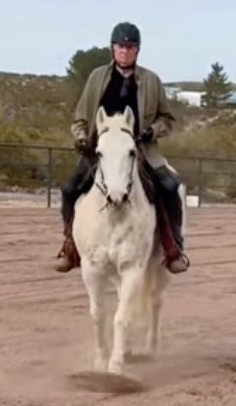
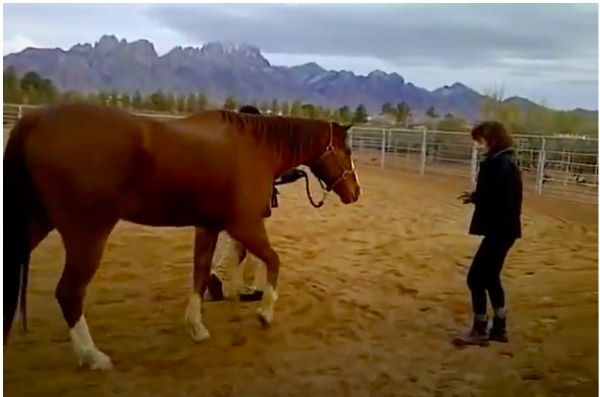
love to introduce you David's horse 'Fancy Girl and to
Grace Ann as she helps a veteran get to know 'Lucky Boy'
References and Endnotes
1. Amygdala, Cortisol, and Adrenaline in Trauma Response
McEwen, B. S., & Gianaros, P. J. (2015). Stress effects
on neuronal structure: Hippocampus, amygdala, and prefrontal
cortex. Neuropsychopharmacology, 41(1), 3-23.
When we experience trauma, the
amygdala sends distress signals triggering the release of
epinephrine (adrenaline) and cortisol. This stress response
is well-documented in neuroscience research.
2. Exposure Therapy Dropout Rates
Imel, Z. E., Laska, K., Jakupcak, M., & Simpson, T. L.
(2013). Meta-analysis of dropout in treatments for
posttraumatic stress disorder. Journal of Consulting and
Clinical Psychology, 81(3), 394-404.
Schnurr, P. P., Chard, K. M., Ruzek, J. I., Chow, B. K.,
Resick, P. A., Foa, E. B., et al. (2022). Comparison of
prolonged exposure vs cognitive processing therapy for
treatment of posttraumatic stress disorder among US veterans:
A randomized clinical trial. JAMA Network Open,
5(1), e2136921.
Wells, S. (2019). Examining dropout from Prolonged
Exposure Therapy in veterans with posttraumatic stress
disorder. University of California, San Diego.
Meta-analyses show that approximately
36% of individuals with PTSD drop out of exposure-based
trauma treatments. In real-world VA settings, dropout rates
range from 47-60% depending on the delivery method and
population.
3. Concerns About Retraumatization
Purnell, L., Chiu, K., Bhutani, G. E., Grey, N., El-Leithy,
S., & Meiser-Stedman, R. (2024). Clinicians' perspectives
on retraumatisation during trauma-focused interventions for
post-traumatic stress disorder. Journal of Anxiety
Disorders, 106, 102913.
Springer, S. H. (2024). A critical view of conventional
exposure therapy. Psychology Today.
While exposure therapy is
evidence-based and helps many people, some patients and
clinicians report concerns about retraumatization. Clinician
surveys found that 3.4% of patients were reported to
experience retraumatization during trauma-focused therapy,
and clinicians expressed an average fear level of 30.3 out
of 100 about potential harm from trauma-focused therapy.
4. Everything as Vibrating Energy
Kasas, S., Ruggeri, F. S., Benadiba, C., Maillard, C.,
Stupar, P., Tournu, H., Dietler, G., & Longo, G. (2015).
Detecting nanoscale vibrations as signature of life. Proceedings
of the National Academy of Sciences, 112(2), 378-381.
At the quantum level, all
matter—including living cells—exhibits characteristic
vibrations. This is established physics, confirmed by
research showing that living cells have distinct vibrational
signatures that distinguish them from non-living matter.
5. Stress, Emotion, and Immune Function
Segerstrom, S. C., & Miller, G. E. (2004). Psychological
stress and the human immune system: A meta-analytic study of
30 years of inquiry. Psychological Bulletin, 130(4),
601-630.
Cohen, S., Janicki-Deverts, D., Doyle, W. J., Miller, G. E.,
Frank, E., Rabin, B. S., & Turner, R. B. (2012). Chronic
stress, glucocorticoid receptor resistance, inflammation, and
disease risk. Proceedings of the National Academy of
Sciences, 109(16), 5995-5999.
Kiecolt-Glaser, J. K., McGuire, L., Robles, T. F., &
Glaser, R. (2002). Emotions, morbidity, and mortality: New
perspectives from psychoneuroimmunology. Annual Review of
Psychology, 53, 83-107.
Extensive meta-analyses confirm that
chronic stress and negative emotional states suppress immune
function, increase inflammation, and elevate the risk of
chronic illnesses. Conversely, positive emotional states are
associated with better health outcomes.
6. Dr. David Hawkins' Map of Consciousness
Hawkins, D. R. (2002). Power vs. Force: The hidden
determinants of human behavior. Hay House.
Hawkins, D. R. (2020). The Map of Consciousness
Explained: A proven energy scale to actualize your ultimate
potential. Hay House UK Limited.
Dr. Hawkins developed a philosophical
and spiritual framework called the "Map of Consciousness" or
"Scale of Consciousness" that categorizes human emotions and
states of consciousness on a scale from 1 to 1,000. This
framework uses kinesiology (muscle testing) as its
methodology. While this work is influential in wellness and
spiritual communities, it should be noted that the specific
frequency measurements (e.g., "shame at 20 Hz," "love at 500
Hz") are not validated by peer-reviewed neuroscience
research. However, the general principle that emotional
states affect physiological health is well-supported by
scientific evidence (see endnote 5).
Research Foundation
Our equine-assisted restorying programs are grounded in
extensive research published in peer-reviewed journals and
presented at international conferences. Below are key
publications that inform our methodology:
Core Restorying Research
Boje, D. M. (2001). Narrative Methods
for Organizational & Communication Research. London:
Sage.
Boje, D. M., & Rosile, G. A. (2018).
Releasing Story Filters: The Seven Steps of Embodied Restorying
Process.
Boje, D. M., & Rosile, G. A. (2020). How
to Use Conversational Storytelling Interviews for Your
Dissertation. Edward Elgar Publishing.
Equine-Assisted Restorying for Veterans
Flora, J., Boje, D., Rosile, G. A., &
Hacker, K. (2016). A Theoretical and Applied Review of Embodied
Restorying for Post-Deployment Family Reintegration. Journal
of Veterans Studies, 1(1), 129-162. Available here
Boje, D. M., Flora, J., Rosile, G. A.,
England Kennedy, L., Vaillancourt, K., Marin, M. R., &
Strand, A. (2015). Equine-Restorying Military Family
Research. Las Cruces, NM.
Boje, D. M., & Rosile, G. A. (2015,
March). Equine-assisted restorying for veterans and their loved
ones. Presentation at the annual conference of the Equine
Assisted Growth and Learning Association (EAGALA), Utah.
Boje, D. M., Rosile, G. A., Hacker, K. L.,
England Kennedy, E. S., & Flora, J. (2013). Combining
restorying and equine-assisted skills training in counselor
communication designed to help soldiers and their families
recover from traumatic stress. Interdisciplinary grant approved
for funding by NMSU Office for Research.
Organizational & Change Applications
Boje, D. M., Rosile, G. A., Dennehy, R.,
& Summers, D. J. (1997). Restorying reengineering: Some
deconstructions and postmodern alternatives. Communication
Research, 24(6), 631-668.
Boje, D., & Rosile, G. A. (2003a).
Comparison of socio‐economic and other transorganizational
development methods. Journal of Organizational Change
Management, 16(1), 10-20.
Rosile, G. A., & Boje, D. M. (2002).
Restorying and postmodern organization theater: Consultation in
the storytelling organization. In R. R. Sims (Ed.), Changing
the Way We Manage Change (pp. 271-290). Westport, CT:
Quorum Books.
Indigenous & Leadership Wisdom
Boje, D. M., & Rosile, G. A. (2016).
Restorying Indigenous Leadership: Generative Metaphors from
Apache Storytelling Traditions. Leadership, 12(3),
385-412.
Rosile, G. A., Herder, R., & Boardman,
C. M. (2016). American Indian and Euro-Western negotiations:
Creating mutual benefit with upsurging antenarrative spirals. Journal
of Strategic Contracting and Negotiation, 2(4), 269-293.
Methodology & Ethics
Rosile, G. A., Boje, D. M., Carlon, D. M.,
Downs, A., & Saylors, R. (2013). Storytelling diamond: An
antenarrative integration of the six facets of storytelling in
organization research design. Organizational Research
Methods, 16(4), 557-580.
Rosile, G. A. (2011). The Antenarrative of
ethics and the ethics of antenarratives. In D. M. Boje (Ed.), Storytelling
and the Future of Organizations (pp. 87-100). Routledge.
Rosile, G. A., & Boje, D. (2021).
SPIRAL Experiments. In Making Sense of Stories: An
Inquirer's Compendium (p. 116).
Additional Applied Research
Cast, M. L., Rosile, G. A., Boje, D. M.,
& Saylors, R. (2013). Restorying a hard day's work. In P. L.
Perrewé, J. Halbesleben, & C. C. Rosen (Eds.), The Role
of Emotion and Emotion Regulation in Job Stress and Well Being
(pp. 257-281). Emerald Group Publishing Limited.
Boje, D., Motamedi, K., & Rosile, G.
A. (2010). Change with Restorying. Presentation at Academy of
Management (AoM-USA), June 14-16.
Rosile, G. A., Dennehy, R. F., &
Bodensteiner, N. M. (1998). Restorying for personal and
organizational change. Proceedings of the Southwest Academy of
Management, Dallas, TX.
Ready to Add the Missing Piece?
Keep your therapy. Keep your meds. But
add the proven path to creating a new story of potential and
serenity.
If you're in therapy, that's good—keep going.
If you're on medication, that's important—keep taking it. But
if you're still stuck reliving the past, if you're still in
that rabbit hole despite all the treatment, you need something
more. You need coaching that creates transformation, not just
understanding.
Our equine-assisted restorying programs are
offered completely free to veterans, active
military personnel, first responders, and their families. No
cost. No insurance battles. Just proven coaching methods with
horses who will help you climb out of the rabbit hole and
create your new story.
Your living story is happening right now.
Therapy helps you understand it. Medication helps you manage
it. But coaching—coaching with horses—helps you transform it.
We'll design a program that meets your family's unique needs
and schedule.
You don't need to choose between therapy
and coaching. You need both. Therapy gives you insight.
Coaching gives you the tools to climb out of the rabbit hole
and create a new story of potential and serenity.
Don't stay stuck in the rabbit hole.
Use this proven path to climb out and create your new story.
Contact us today.